

Lately, there’s been a lot of buzz about AI-powered logo generators — tools that promise “amazing logo designs, instantly.” Naturally, we were curious. So we decided to try one for ourselves, partly as an experiment and partly because we know sooner or later a client (or prospective client) will ask: “Why shouldn’t I just use one of these?”
This wasn’t our first encounter with quick-fix logo generators, though. Over the years, we’ve met more than a few clients who invested in a template logo — only to find out later that the their design didn’t scale well, could not be edited for different formats or uses, failed to make them stand out in their industry, or worse, was so generic and overused, it quickly became dated.
So, we rolled up our sleeves, entered our business name (and some keywords) into an AI platform, and generated a batch of logos. The results? Well… let’s just say they made for a great case study in why the human approach is still the better approach.
Why Human-Designed Logos Are Better for Business
A logo isn’t just a pretty graphic with your name underneath — it’s the foundation of your brand identity, and it needs to work across every channel, stand apart from competitors, and grow with you over time. That’s something no algorithm can do.
We knew AI-powered logo generators would be fast. Ours was! The generators quickly turn out a multitude of combinations of icons and fonts. More than 10,000 combinations, in fact!
Yet when we stacked the many “Design and Branding Made Easy” AI-generated logos against what insight180 Art Director Bethany Howell creates for our clients, there was really no comparison.
1. Strategic Alignment with Brand Vision
A designer doesn’t just slap your business name on a shape. Instead, there’s an entire discovery process to make sure we understand your positioning, your mission and values, your audience, your goals, and the story you want to tell. A true brand strategist will actually help you get clarity and focus for your business before the talk of any sort of visual representation occurs.
A professional designer makes sure your logo is relevant and aligned from the start — and we’ll only present the most aligned four to six options we think will work best for you.
AI platforms will give you many (and more!) options (see #3), but they can’t guide you toward what’s appropriate for your industry, your company, your values or your customers.
2. Originality and Differentiation
AI outputs may look slick at first glance, but they’re built from recycled parts. The more you look, the more they all start to look the same. That means your “unique” logo could show up in another industry — or worse, in your competitor’s branding.
As Bethany put it: It’s not specific to you as a company. It’s more like clip art with nothing unique to you. Unfortunately, we’ve definitely seen it before.
3. Emotional Intelligence and Storytelling
“Your logo is the heart of your business.” — Bethany Howell
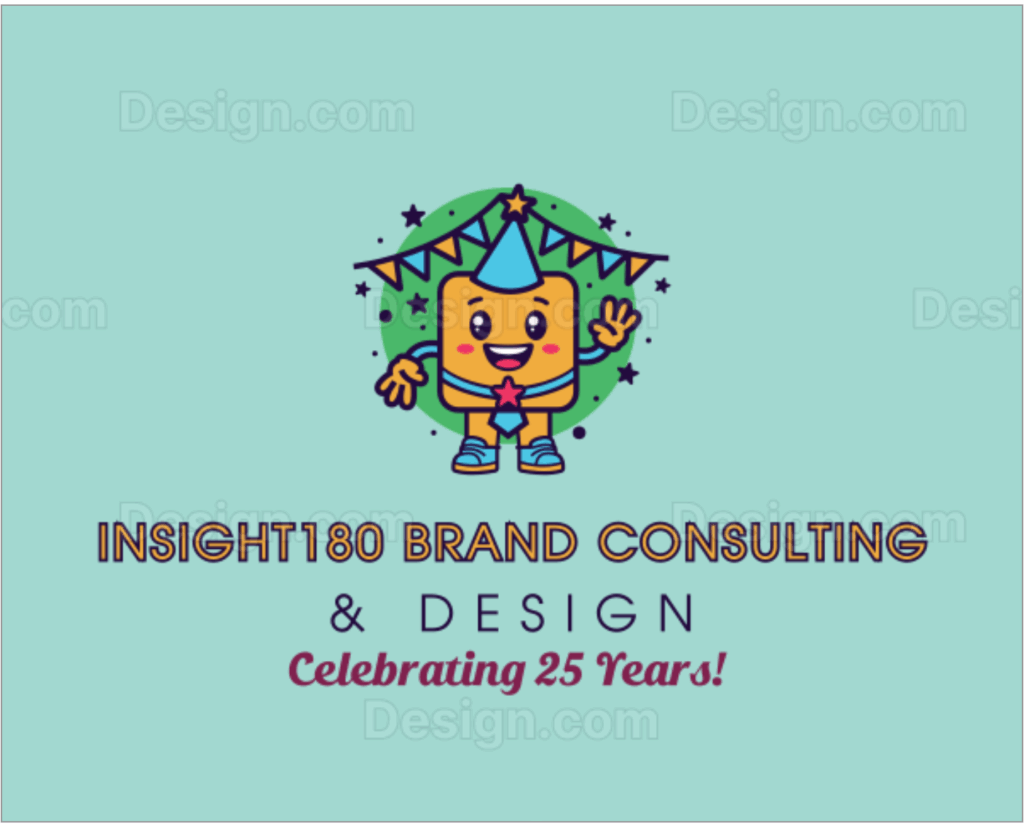
When we were invited to sign up to “Create your dream logo in seconds,” we were asked for key words, style and color preferences, and not much more. What we got were some odd looking mascots and a kind of everything-but-the-kitchen-sink approach. The logos were clearly trying to do too much.
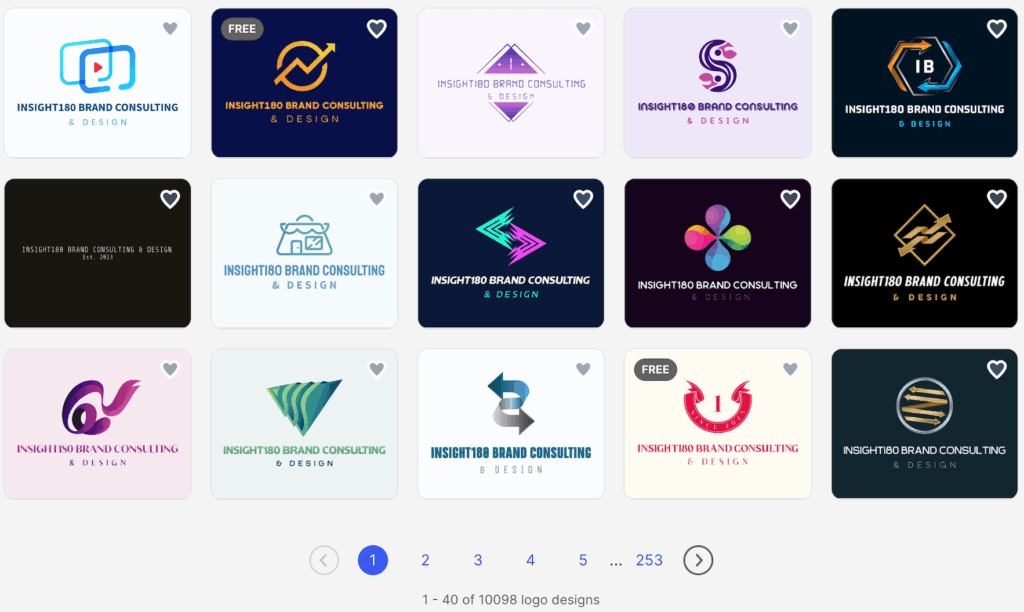
Remember, logos are meant to identify, not necessarily explain all that you do. Good logos will help compel audiences to engage, linger, and look again.
Great brands connect with people on a deeper level, sparking recognition and trust. Human designers know how to weave meaning into the details — through color, shape, typography, and editing — so your logo is the representation of the greater story you will tell. This process takes investigation, collaboration, and time. And it’s totally worth it.
4. Consistency Across Applications
A logo isn’t just for your website header — it needs to work on everything from business cards to billboards to swag. Designers anticipate how it will scale and adapt across mediums, ensuring it looks professional everywhere.
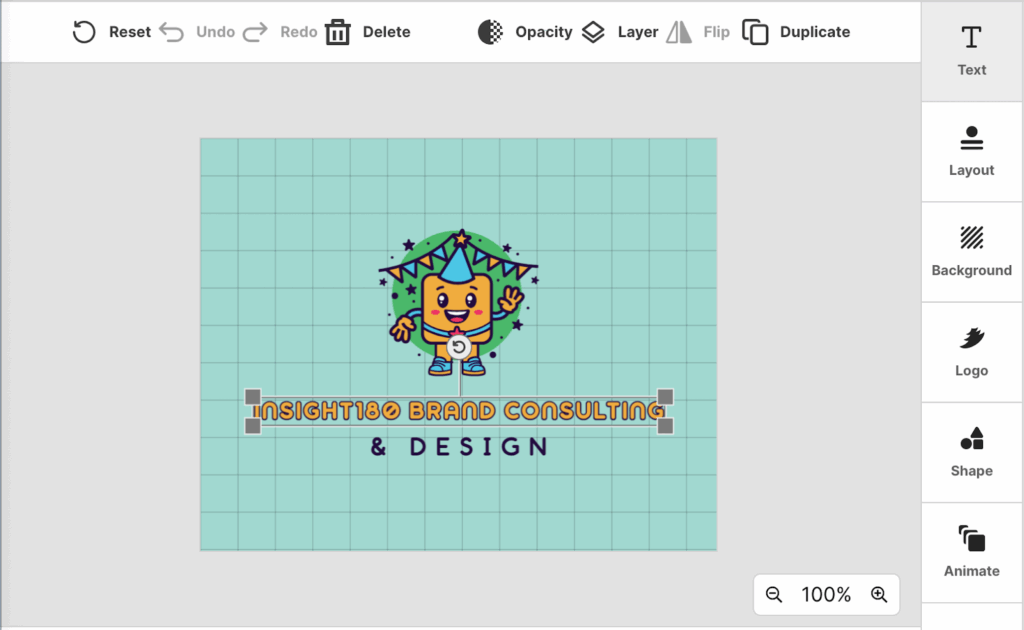
“You’re likely not wanting to have a jumping mascot on your business card,” says Bethany.
5. Craftsmanship and Refinement
“You can’t make art in seconds.” —Bethany Howell
Behind every polished logo is an intentional process of balancing proportions, adjusting colors, selecting and adapting typography, and fine-tuning details. That kind of craftsmanship can’t be rushed. Also, it’s important to note that many AI logos render type as line art – no actual fonts are assigned to the logos which makes any kind of shift or expansion of the brand problematic.
6. Collaborative Process
We could write a whole series of blogs on the type of collaboration you should expect when working with a design firm. We don’t work in a silo when designing your brand and logo, and we hope you don’t want us to. When you work with a designer, you’re not just buying a file — you’re gaining a partner and receiving expert advice. A branding team uncovers what inspires you, and shares additional inspiration you may not have considered. You get to share ideas, give feedback, and refine until it feels truly yours. AI, by contrast, just asks you to type in a keyword like “modern” or “bold” and hope the algorithm gets it right.
7. Future-Proofing Your Brand
A well-designed logo grows with your business. AI can spit out a quick design, but it can’t anticipate how your brand will evolve over the next five years. It’s also “learning” from all the past logos and input it could gather. The discernment and taste is questionable.
Bethany’s advice is clear: “When it comes to your logo, truly the heart of your brand, investing in an experienced design and branding team will pay dividends. It’s such a crucial element to your business, it’s definitely not the place to cut corners. ”
The Results Are In
After testing an AI logo generator, we can confirm what experience has already taught us: while these tools might be fun to play with, they don’t come close to delivering the strategy, originality, and staying power that a human-designed logo brings to the table.
So yes, AI can give you “a logo” instantly. But if you want your logo—one that truly represents who you are and where you’re going—you’ll need a human partner to get it right. Curious what that process looks like? Reach out to insight180 to start the conversation.

Leave a Reply